
In this article, you’ll discover how body doubling helps ADHD adults and high performers overcome procrastination and boost productivity.
If you’re a high-performing adult with ADHD, you’ve probably mastered the art of doing big things under pressure — but still struggle with small, everyday tasks. You can lead teams, manage complex projects, or deliver brilliant work on a deadline, yet somehow laundry, email, or admin work feels impossible to start.
You’re not lazy, unmotivated, or broken. You’re running a high-capacity brain with an attention system wired for stimulation and accountability, not solitary routine.
Enter one of the most effective, low-tech, research-backed ADHD productivity tools out there: body doubling.
What Is Body-Doubling?
Body doubling simply means doing a task in the presence of another person — physically or virtually. In a session, you’re not collaborating, working together, or even paying attention to your partner much; you’re just working alongside someone else. As a result, the presence of that other person acts as an external regulator for your attention and motivation.
Think of it as social co-regulation for productivity.
You might:
- Sit in a shared office or coworking space and each tackle your own to-do list.
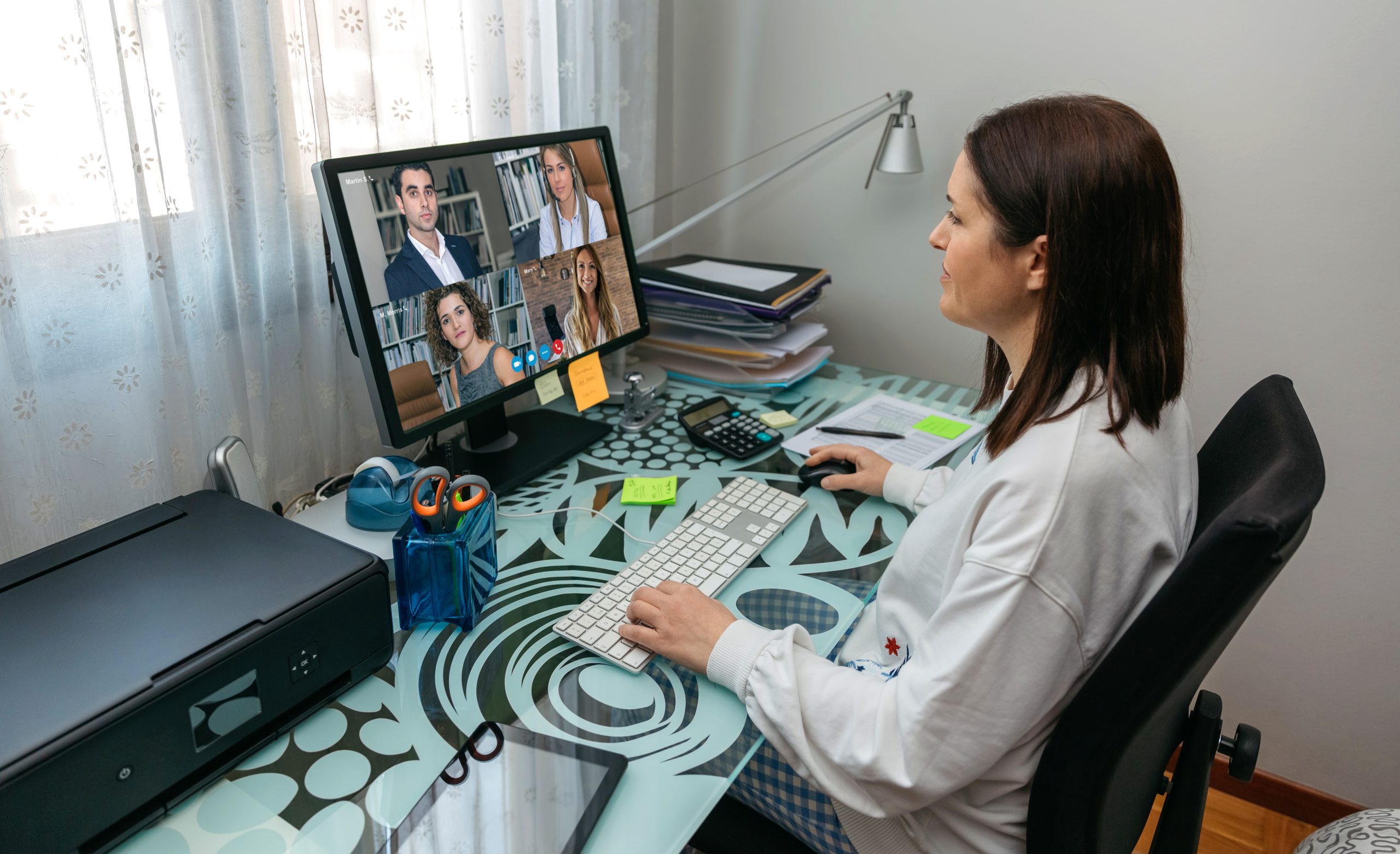
- Log into a Zoom “focus room” or body-doubling session where participants silently work on individual projects.
- Or, you can hang out on FaceTime while you clean your desk or finish bookkeeping.
No judgment. No micromanagement. Just mutual presence and focus.
Why It Works for ADHD Brains
ADHD is fundamentally a motivation and activation disorder, not a deficit of willpower. The ADHD brain struggles to self-start on tasks that don’t offer immediate stimulation or reward. Because of these nervous system truths, external cues (deadlines, another person’s presence, or shared structure) can push a dopamine release to help you focus.
Body-doubling creates exactly that kind of external structure that works for ADHD adults:
- Accountability without pressure. Someone’s “there,” which increases your sense of responsibility and attention.
- Co-regulation. The brain’s mirror neurons respond to others’ energy — seeing someone else focused helps you get into the same zone.
- Social reward. The subtle connection of working together provides mild stimulation, reducing boredom and distraction.
- Bounded time. Sessions often run in focused blocks (25–60 minutes), which naturally activate urgency and help ADHD adults break the inertia barrier.
The Science Behind Body-Doubling
While more normal studies on body-doubling itself are still emerging, the underlying neuroscience is well-documented. ADHD brains have differences in dopamine regulation, the neurotransmitter that fuels motivation, pleasure, and task initiation. Social engagement and shared focus both increase dopamine activity, which can jumpstart executive function.
A 2021 review in Neuroscience & Biobehavioral Reviews found that social context enhances attention and task persistence in people with ADHD, largely due to dopamine modulation and reduced perceived effort.
In other words, we think, focus, and persist better together.
Certainly, that’s why so many high-performing ADHD adults intuitively use coworking sessions, mastermind groups, or “check-in” partners long before they ever hear the term body-doubling.
Body-Doubling in Action: How High Performers Use It
Let’s make this practical. Here are five real-world ways high-performing ADHD adults use body-doubling to get things done.
1. Host A Regular Virtual Power Hour
As an example, here’s how to host your own virtual power hour,
- You and a fellow ADHDer agree to work together in a 60-minute window.
- Both of you join a video call,
- Minimally build rapport
- Announce what you’ll work on (“I’m finishing slides for the client pitch”)
- Mute yourselves and work silently on your own work.
At the end of the session, you debrief briefly by sharing wins and next steps for 2 minutes each, then the shared meeting ends.
This simple rhythm builds accountability and energy without needing a manager or “boss.”
Pro tip: Use apps like Focusmate, Flown, or Caveday — or even create your own recurring Zoom link. The predictability helps train your brain to show up ready.
2. Create Teamwide Work Sprints
ADHD high performers often thrive in collaborative sprints. However, it’s really important to create ground rules around boundaries. You can implement body doubling as a group productivity ritual — short, structured sessions where the team works simultaneously on parallel goals.
Example:
- 5 minutes: Declare your goal
- 45 minutes: Silent work time
- 10 minutes: Share progress
Teams using this model often report less procrastination and higher morale, because shared focus cuts through the isolation of hybrid work.
3. Body Double At Home
Sometimes, body doubling doesn’t even need technology. It can happen at home with your partner, teen, or friend. When my kids were school-aged, they would regularly join me in the kitchen as I prepared dinner. We could catch up, or not – but we would all work together on our different tasks.
Here are some other examples: You fold laundry while another person reads. Partners start cleaning different parts of the house at the same time. Or, one person works on taxes while the other engages in a different passive task. In this way, body doubling can enhance your relationships at home.
It’s not about help — it’s about presence. In essence, body doubling feels like having another person nearby, which activates just enough accountability to overcome task inertia. Another way body doubling helps is by turning solitary, boring chores into shared time.
4. Try ADHD Coaching Sessions
In ADHD coaching, some clients want me to body-double for them, and when we have a work session, body doubling is often embedded into the call.
Clients join sessions to review progress, set goals, and then implement tasks between calls — sometimes using their coach as a body double during live sessions for high-resistance tasks like organizing email, submitting a report, or writing outreach messages.
Why it works:
The coach’s calm presence and focus anchor the client’s attention, reducing overwhelm and boosting momentum. Even silent accountability — “I’m here while you do it” — can shift a stuck task into motion.
5. The Self-Guided Community Model
Online ADHD communities are now leveraging body-doubling as part of structured productivity programs. Members join scheduled coworking sessions hosted by facilitators who create a safe, supportive, and shame-free environment for focus.
Our friends at Shimmer put this great list together of these top ADHD body-doubling communities.
This approach combines the neurobiological benefits of social regulation with the emotional benefits of belonging, which can be transformational for high-achieving ADHD adults who often feel isolated by their productivity struggles.
How to Set Up Your Own Body-Doubling Practice
Here’s how to integrate body doubling into your productivity system without adding more complexity or pressure.
Step 1: Identify Your High-Resistance Tasks
Body-doubling works best for tasks that are:
- Easy to procrastinate regularly
- Boring or repetitive
- Require consistent follow-through but little creative stimulation
- Long-range and maintenance-oriented
Examples of high-resistance tasks: invoices, email triage, paperwork, home organization, administrative updates, or writing tasks that lack immediate feedback.
Step 2: Choose Your Partner or Platform
Options range from casual to structured:
- Peer body-doubling: Partner with a friend or colleague who also wants accountability.
- Professional coworking spaces: Local or virtual focus rooms.
- Apps: Focusmate, Flow Club, Flown, or virtual ADHD coworking communities.
- Coaching body-doubles: Join with your ADHD coach for timed implementation sessions.
Pick what matches your comfort level — the key is consistent, low-friction access.
Step 3: Set Clear Parameters
Before each body doubling session:
- Name the specific task you’ll complete.
- Set a timer (25–60 minutes).
- Turn off notifications and external distractions.
- Briefly check in afterward to celebrate progress.
These small rituals create psychological closure and strengthen your brain’s success loop.
Step 4: Make Body Doubling A Routine
ADHD thrives on novelty but needs consistency. Schedule two to three body-doubling sessions per week in your calendar. Don’t overstretch at first – Even 30 minutes can help.
Over time, your brain starts associating these sessions with focus and completion, making task initiation smoother even when you’re solo.
Common Misconceptions About Body-Doubling
- “I should be able to do it myself.”
Any time ‘should’ thoughts come to mind, understand you’re fighting your own inner critic. As a result, shoulds are one of the biggest mental blocks. ADHD is not a failure of discipline; it’s a difference in activation. Using body doubling is not codependence; it’s a strategy. Just as glasses help you see clearly, a body-double helps your brain start and stay on track. - “It’s weird or awkward.”
The first time might feel unusual, but most people quickly find comfort in the quiet accountability. You’re not performing; you’re simply sharing focus. - “It’s only for simple tasks.”
Actually, many high performers use body doubling for complex or creative work such as coding, design, writing, and presentations. The shared focus helps minimize distraction and perfectionism.
The Emotional Side of Body-Doubling
Beyond productivity, body-doubling also addresses an emotional gap many ADHD adults carry: connection.
When you spend your life fighting distraction and inconsistency, isolation often creeps in. Working alongside another person provides subtle reassurance:
“My brain’s not broken. My brain just works better with support.”
A sense of belonging calms the nervous system and restores self-confidence. These are two ingredients essential for sustainable performance.
When to Use Body-Doubling — and When to Rest
Given these points, body-doubling is powerful, but it’s not meant to replace rest or recovery.
If you’re chronically overworking, the answer isn’t “more sessions.” It’s a balance. Use body-doubling intentionally for activation and completion — but also honor your brain’s need for downtime.
High-performing ADHD adults often confuse productivity with worthiness. Remember: body-doubling helps you focus, not prove yourself.
Bringing It All Together
Body doubling is more than a productivity hack — it’s a form of compassionate accountability.
It works because it acknowledges a fundamental ADHD truth: we are wired for connection, not isolation.
When you build systems that honor your brain’s wiring — instead of fighting it — your productivity becomes more fluid, consistent, and enjoyable.
Try This: Your First Body-Doubling Challenge
- Pick one task you’ve been avoiding all week.
- Text a friend or open Focusmate.
- Set a 45-minute session for tomorrow.
- Announce your task, mute, and get started.
- Afterward, message your partner: “Done!”
Notice how much easier it feels — not because the task changed, but because your brain finally had the activation it needed.
Final Thought
At Sane Spaces, I help ADHD adults and high performers build customized systems that blend neuroscience, structure, and self-compassion. Body doubling is just one of many tools that allow your natural brilliance to shine — without chaos or burnout.
Because thriving with ADHD isn’t about grinding it out all alone. Thriving comes when you find the right supports that help your brain work as beautifully as it was designed to. Reach out if you’d like to learn more about ADHD coaching together.

Leave a Reply
You must be logged in to post a comment.