
The ADHD Accountability Strategies Guide: How to Stay Motivated
If you’ve ever struggled to stay focused, follow through on your goals, or finish what you start, you’re not alone. Many adults with ADHD find that having the right support system can make all the difference. These ADHD accountability strategies are simple, practical techniques designed to create structure, build momentum, and help you stay on track without relying on motivation alone.
Use this infographic to help you put these ADHD Accountability Strategies into practice:
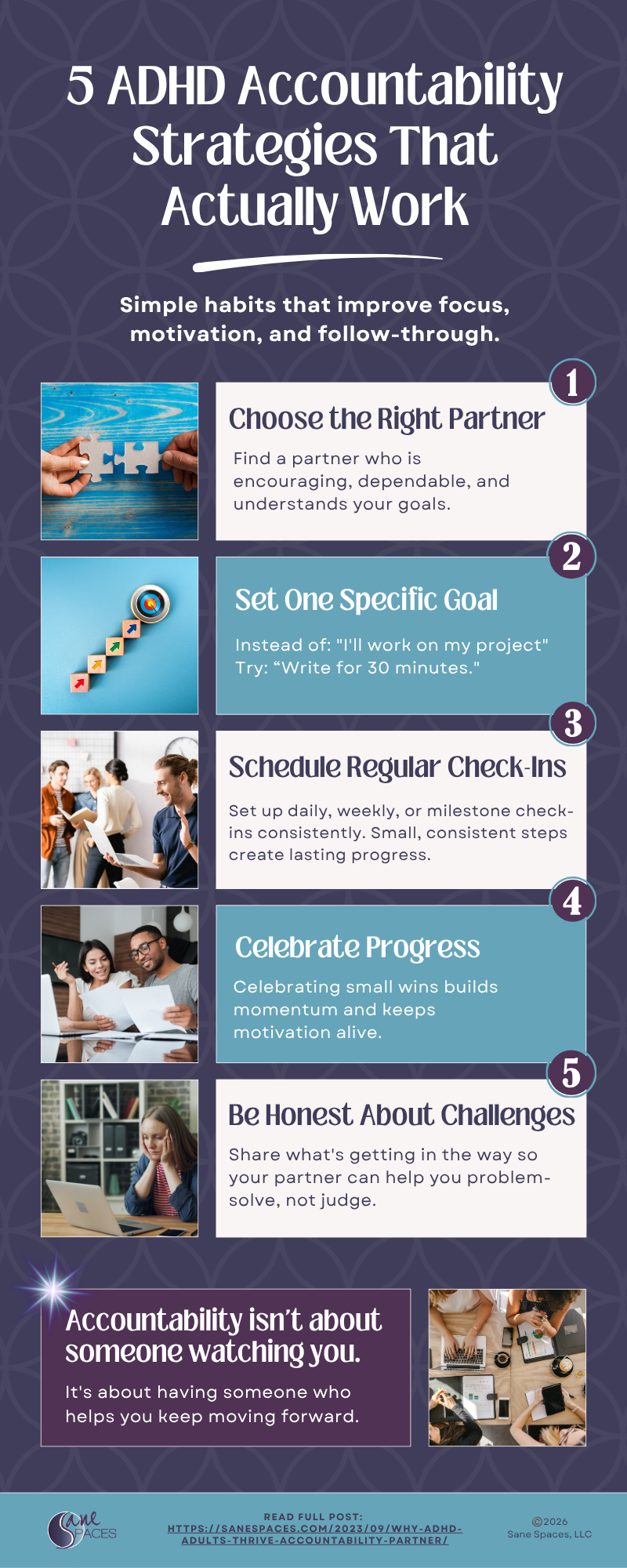
5 ADHD Accountability Strategies That Actually Work Infographic
Improve Focus and Follow-Through with these 5 ADHD Accountability Strategies
In an accountability partnership, each of you works together to keep the other accountable for their goals while regularly checking in on task completion and project progress. Simple habits that improve focus, motivation, and follow-through.
1. Choose the Right Partner
Find a partner who is encouraging, dependable, and understands your goals.
An accountability partner should help you make progress, not add pressure. Look for someone supportive, dependable, and willing to check in regularly. The right person encourages you, helps you stay focused, and celebrates your progress along the way.
2. Set One Specific Goal
Big goals can feel overwhelming. Instead of saying, “I need to work on my project,” choose one clear next step.
Think:
- Write for 20 minutes.
- Reply to one email.
- Organize one drawer.
Small, specific actions make it easier to get started—and keep going.
3. Schedule Regular Check-Ins
Set up daily, weekly, or milestone check-ins consistently. Small, consistent steps create lasting progress.
Motivation comes and goes, but regular check-ins help keep your goals front and center. Whether it’s a weekly call or a quick text, consistent accountability creates momentum.
Momentum beats motivation.
4. Celebrate Progress
Celebrating small wins builds momentum and keeps motivation alive.
Don’t wait until the finish line to celebrate. Every completed task, every check-in, and every small step forward deserves recognition. Small wins build confidence, and confidence builds momentum.
5. Be Honest About Challenges
Share what’s getting in the way so your partner can help you problem-solve rather than judge.
Missed a goal? Don’t hide it. Talk about what got in the way, adjust your plan, and keep moving forward. Accountability isn’t about perfection; it’s about learning, adapting, and making progress.
Set Yourself Up for Success
Accountability isn’t about someone watching you. It’s about having someone who helps you keep moving forward.
Whether you’re working toward personal goals, managing daily tasks, or tackling a big project, these five ADHD accountability strategies can help you make consistent progress, one step at a time.

Leave a Reply
You must be logged in to post a comment.